
Wales - Sep 2026
| Caernarvon Castle - Sep 2026 |
| Start+End | Beaumaris | Conwy | Snowdon | A day off | Caernarvon | Anglesey | Harlech | Strange Stuff | Timeline |
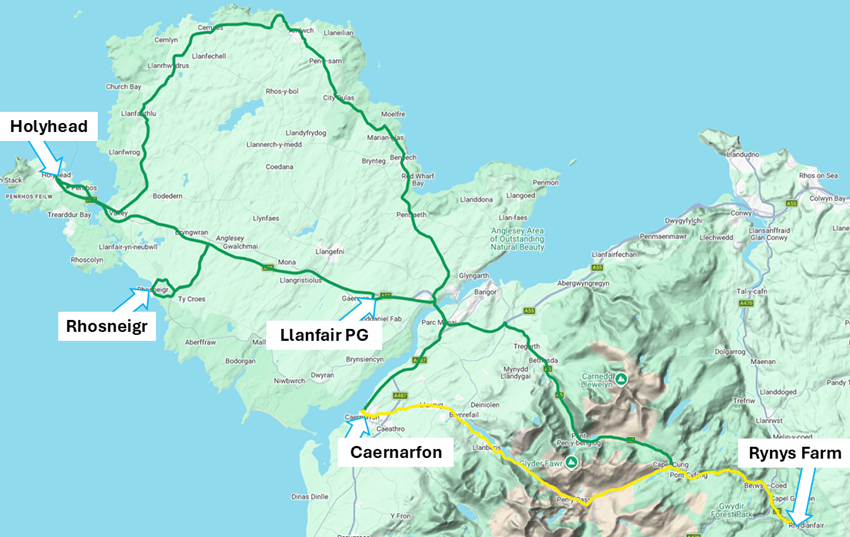
| Today's we made some adjustments to our original plans by visiting both Caernarfon and driving around Anglesey. |
|
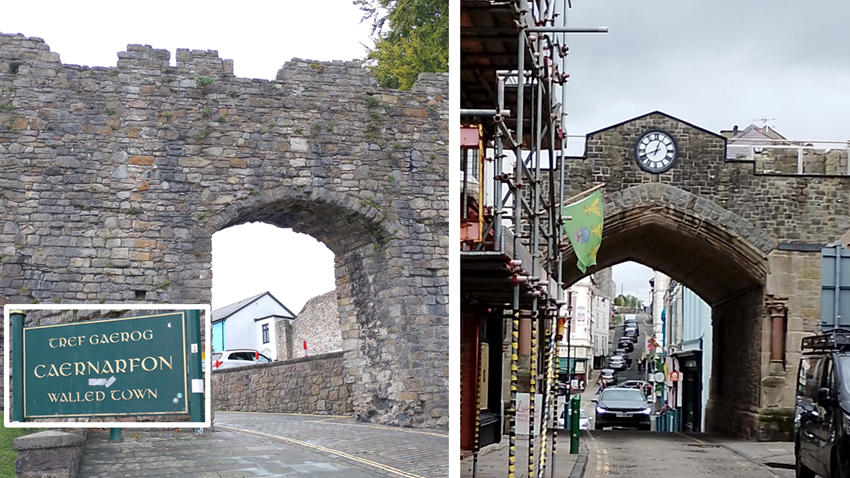
| Today's first stop was Caerarfon Castle - a 45 minute drive from our camp site. As with Conwy, this is a walled town. |
|
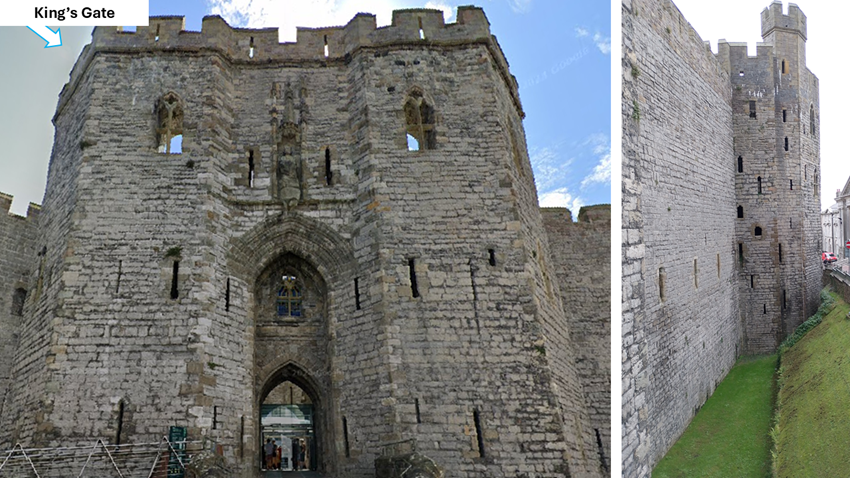
| The castle has an impressive King's Gate entry and a grassy moat around it. There are lots of arrowslits in the castle - to defend against intruders. |
|
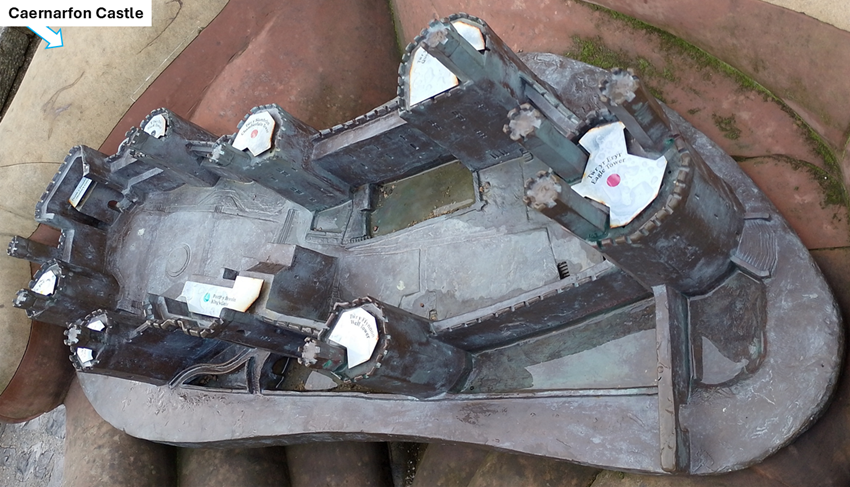
| King Edward I seized Wales in 1282, he hired James of St George to build Caernarfon Castle. Work started in 1283 and finished main parts in 1292 He ran out of money and the King lost interest, so many features were never completed. |
|
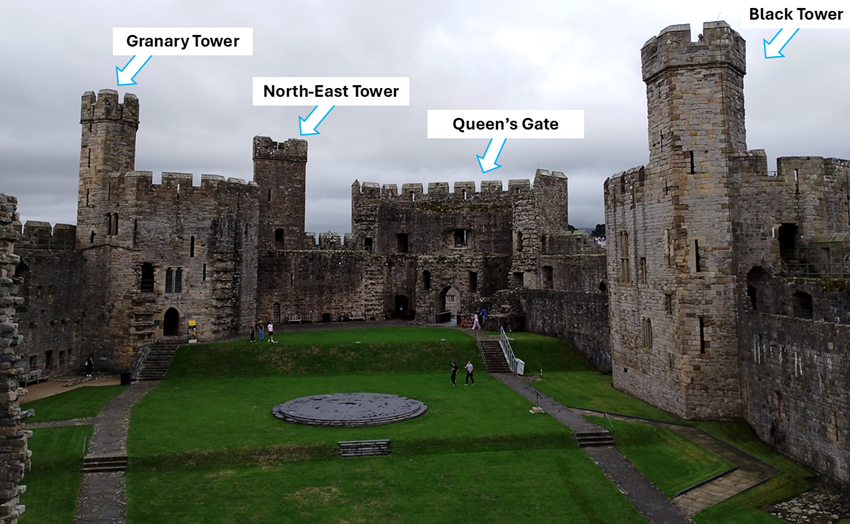
| There are so many towers. From one end we could see the Granary, North-East, Queen's Gate, and Black Towers. |
|
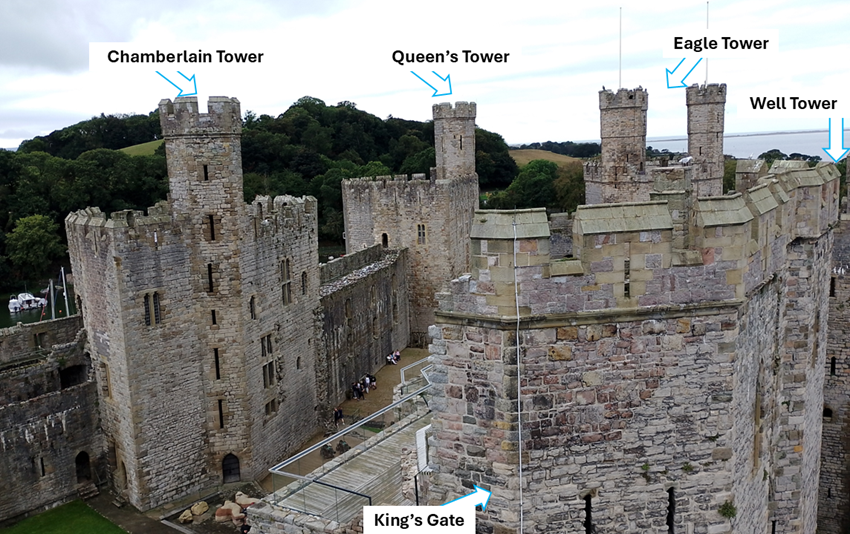
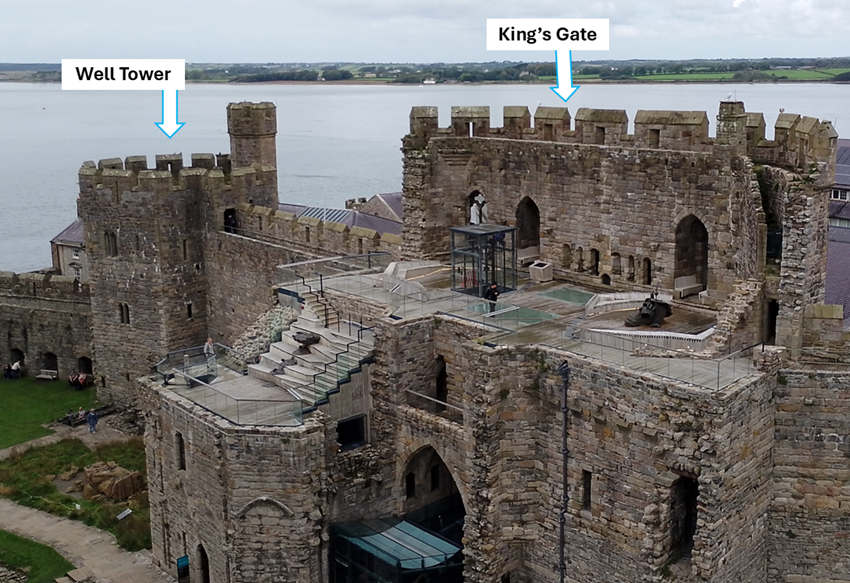
| From the other end we saw the Chamberlain, Queen's, Eagle, Well and King's Gate Towers. There were also smaller towers between these big ones. |
|
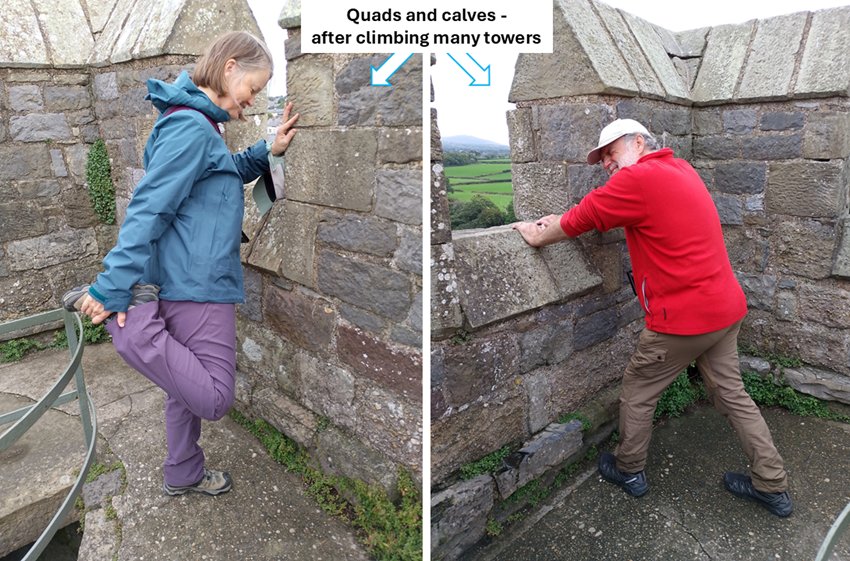
| This is what happens when you are too old to hike up Snowdon and then climb up the many many towers of Caernarfon Castle two days later. Cramp in calves and quads! |
|
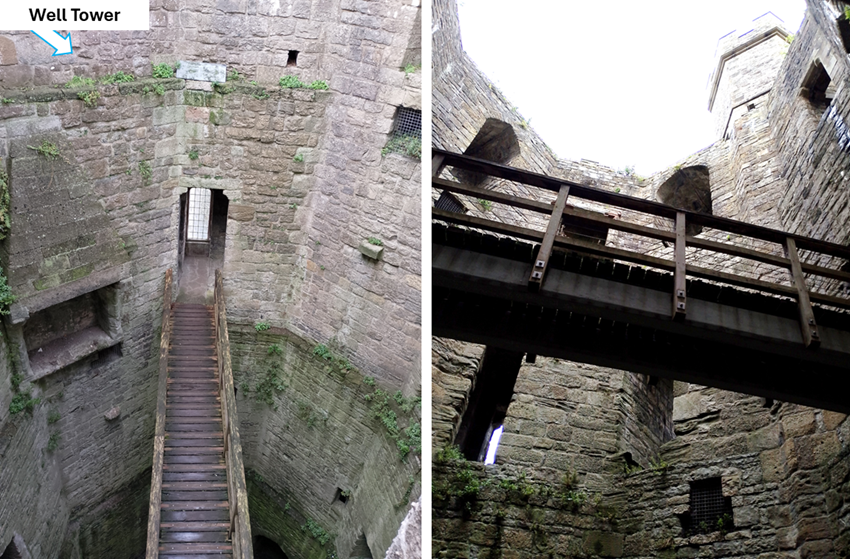
| Here is the view inside the Well Tower. |
|
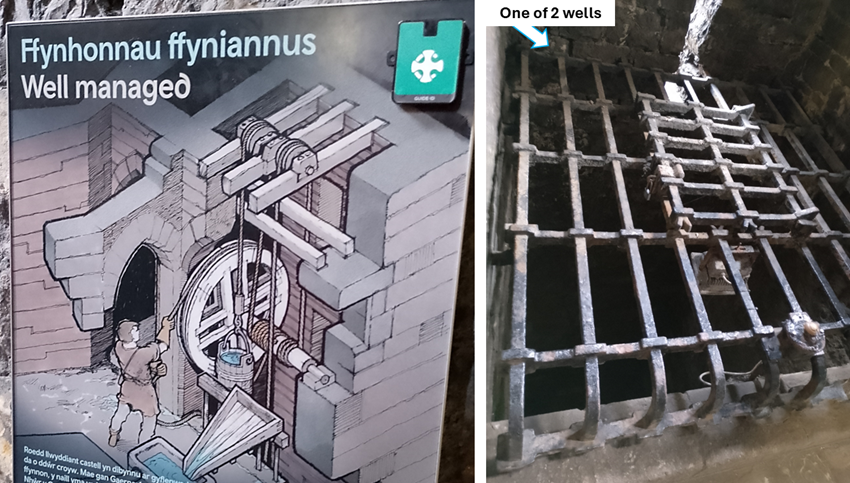
| This was one of the two wells in the castle. Now it is safely blocked by a big grate. It is still very deep but it didn't look very clean. Rain water was also collected in the cistern tower. |
|
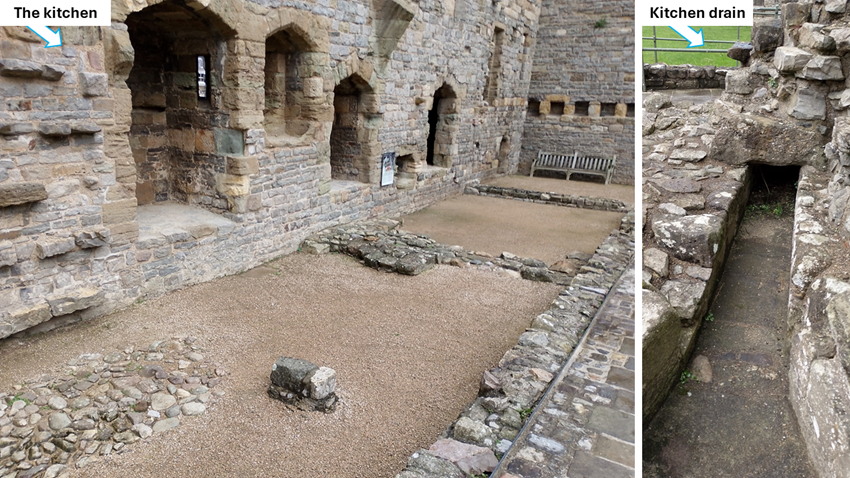
| Water was piped into the kitchen via lead pipes. While they were building the castle there may have been up to 600 people living here and they all needed feeding. Supplies were delivered into the bottom floor of the well tower. There was two large pans boiling over the fires. Waste water was drained through the wall to the moat outside. |
|
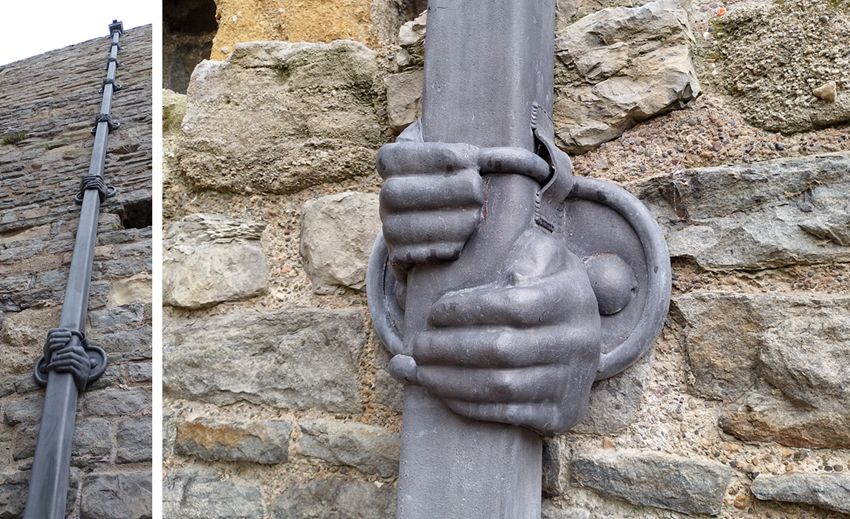
| While lead pipes were used in back then, these are modern lead pipes held in place by the leadworker's hands. |
|
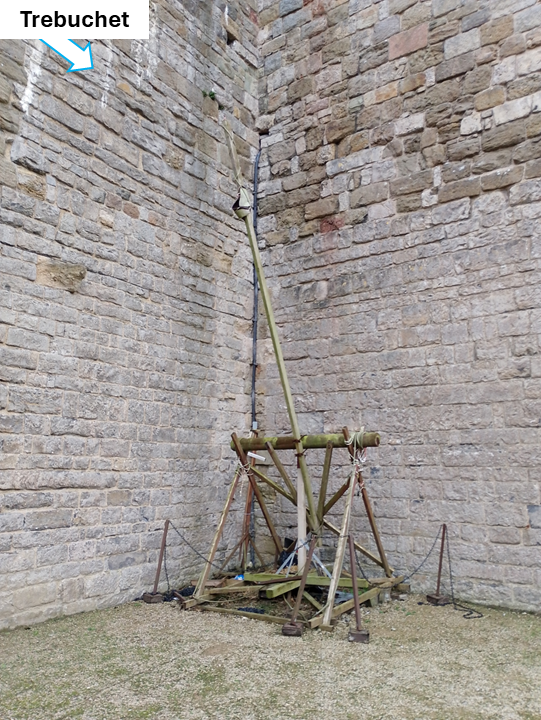
| In the corner of what used to be the great hall, stood a trebuchet. It looked sad sitting there doing nothing. Hopefully they use it in re-enactments sometimes. |
|
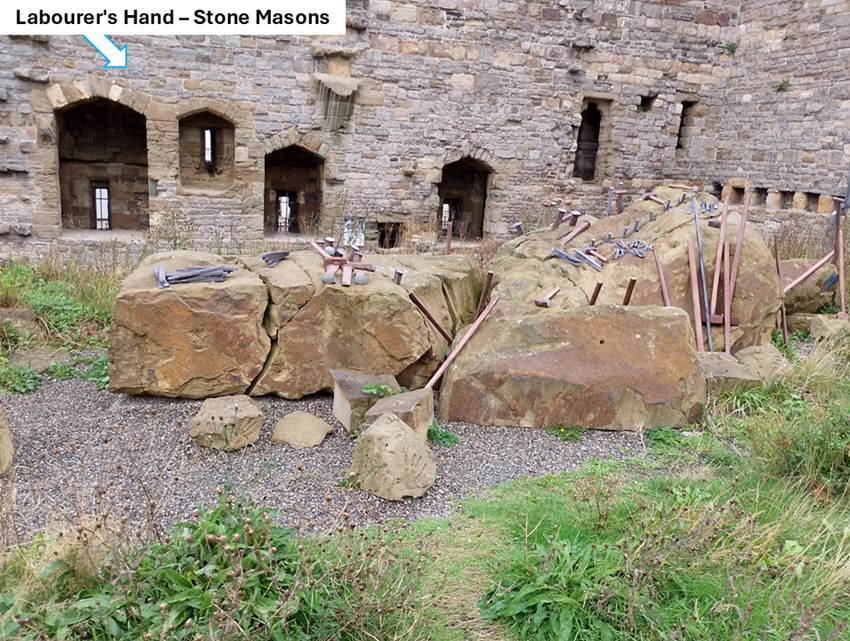
| This art installation honours the stone masons. |
|
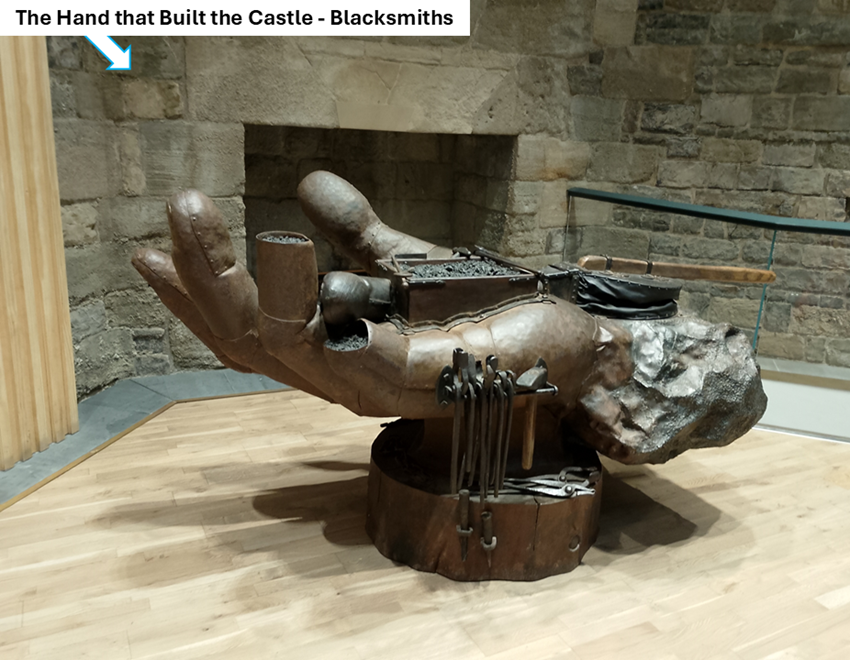
| The other piece of art is called "the Hand that Built the Castle" and it celebrates the blacksmiths with miniature furnace, bellows, tongs, a hammer, and other metalworking tools hanging from the side. |
|
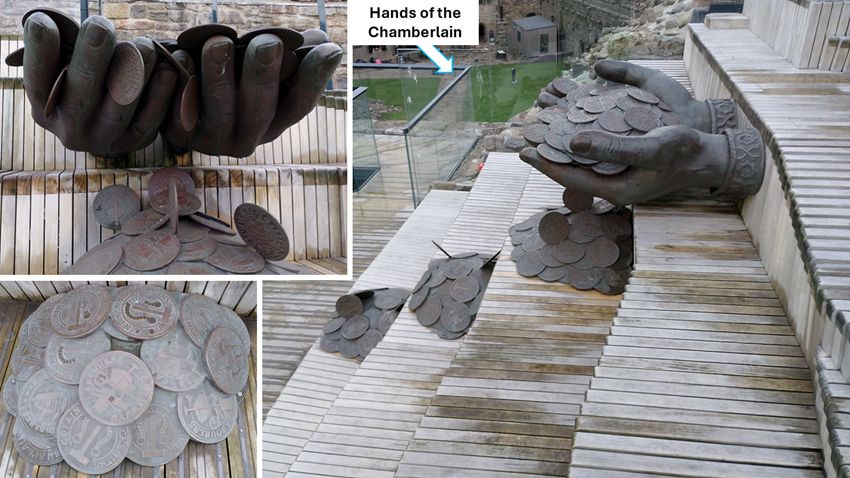
| The hands of the Chamberlain is the art installation illustrating the person who kept track of the King's spending. Rulers at this time had a team of accountants known as the King's Wardrobe (where he kept his valuables). Edward I spent more than he earnt and had to borrow money from the Italian banking family, Ricciardi. They were also ruined in the end! |
|
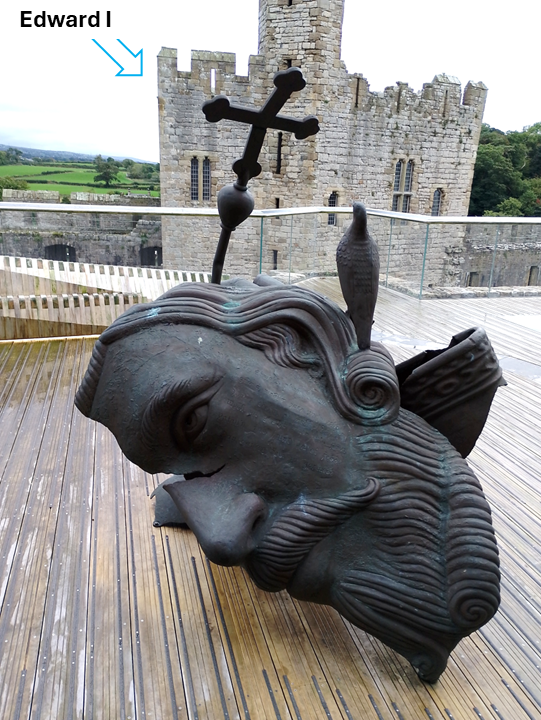
| Edward I has never been popular in Wales and this art piece shows a broken image of him. His castles remind the locals of his wanting to rule Wales, while they resisted his rule. The castles are a reminder of bitter medieval divisions. Now the Welsh flag flies (most days) over Caernarfon. |
|
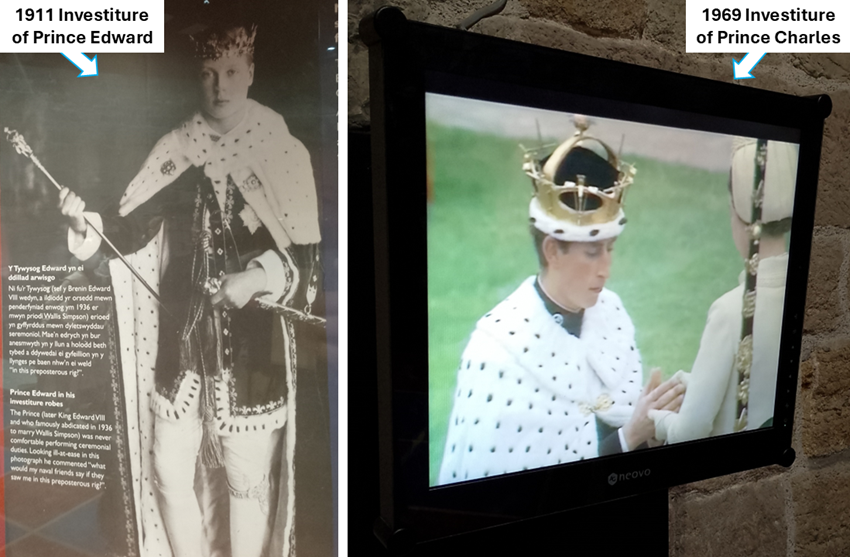
| In the Eagle Tower there was an exibit of the history of the Castle and also the Investiture of the Prince of Wales who will become King next. Prince Edward was the first one in 1911 - although he abicated. The next one was Prince Charles in 1969. His Investiture was broadcast in colour and live on BBC to an audience of 500 million people. Prince William has decided (with his father's support) to not do an Investiture but instead visit communities in Wales. |
|
|
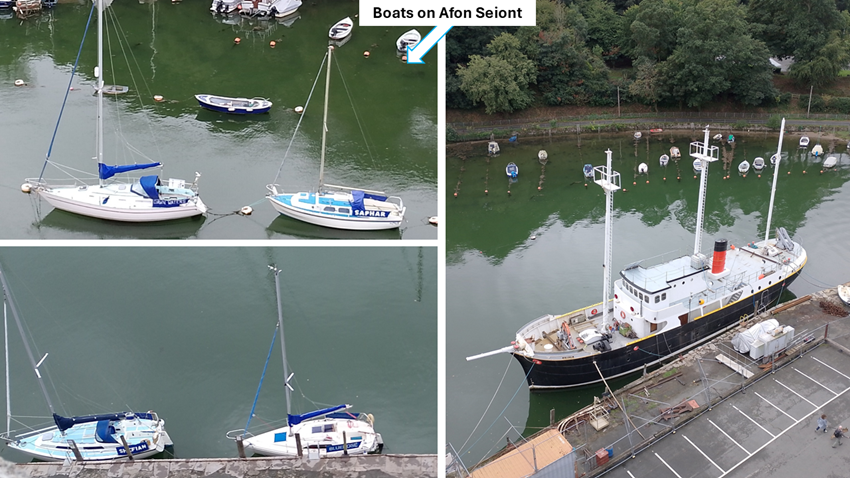
We looked up the somewhat matching boats on the Afon Seiont below the castle. Blue Nose, Shefian, Saphar, Dawn Waters.
We can't find any mention of them in connection to each other - so just a happy accident that they look so
colour coordinated.
The Britain is a 30-metre former lightship built in 1910 in Dublin. Until 2016 it was known as the Arctic Penguin, Hallowe'en, and Penguin. It even sank in 1988, poor thing! Not has been restored nicely. |
|
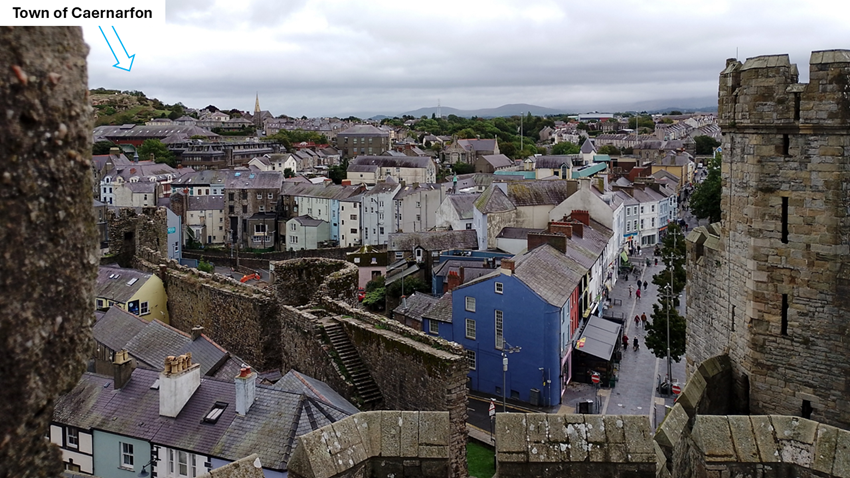
| This is a view over the town of Caernarfon from one of the towers. |
|
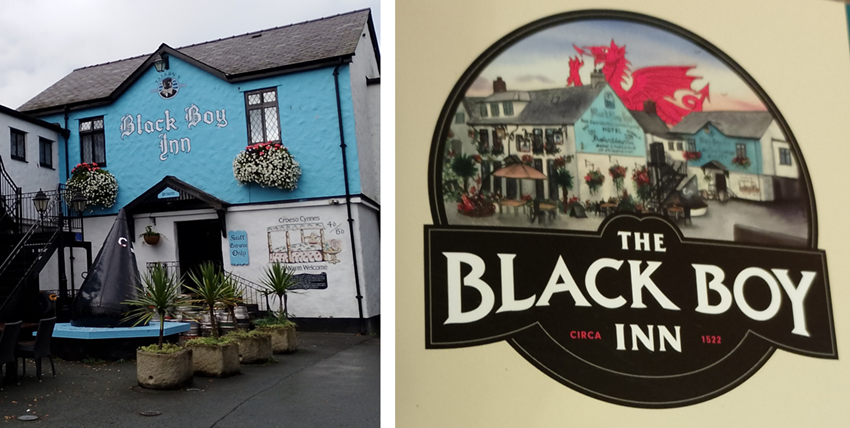
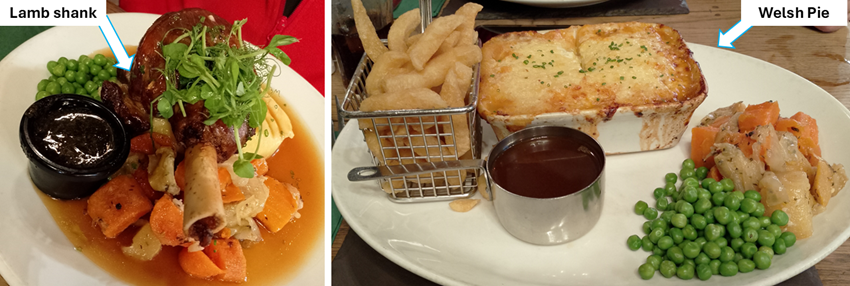
| After a longish walk around town asking different establishments whether they were serving traditional lamb cawl called lobscows. We enjoyed this in Cardiff once - and it sounds and tastes a lot like Norwegian "Lapskaus". No one was serving this, so we doubled back and went to the first restaurant we saw. At Black Boy Inn we enjoyed sharing the two most Welsh dishes we could find on the menu. The lamb shank with mash and veggies and the Welsh Pie with slow-cooked mince with vegetables topped with mash. For carb-loading there were chips on the side too! |
|
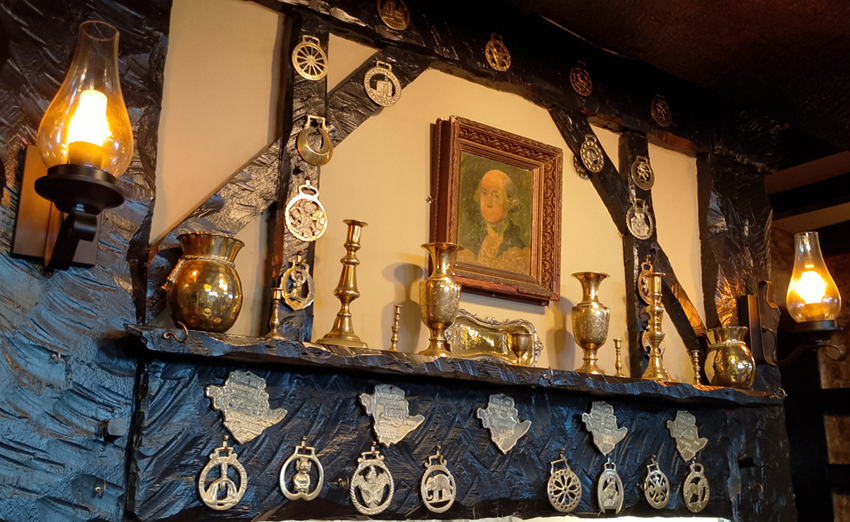
| The Black Boy Inn was cosy and decorated with many vintage horse brasses including some shaped as Anglesey. There was also a portrait of King Charles II, who in our view is a dead ringer for George Washington! Story has it that King Charles II's mother called him "little black boy" because of his dark complexion. Inns named this during the period used it to show their loyalty to the Stuart monarch. |
|
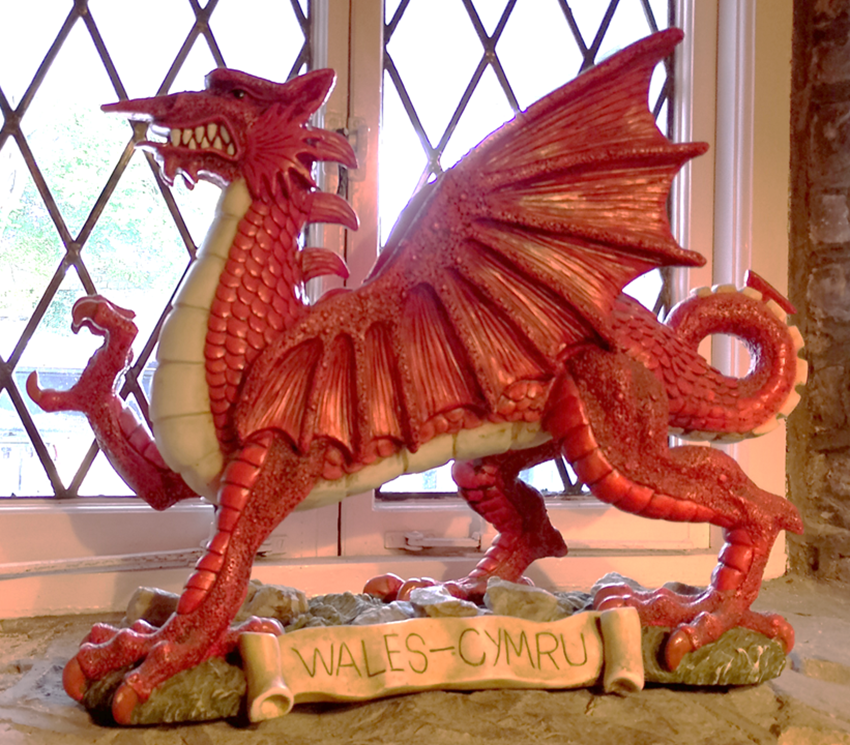
| Of course there was a giant red dragon in one of the windows in the inn. |
|
| Start+End | Beaumaris | Conwy | Snowdon | A day off | Caernarvon | Anglesey | Harlech | Strange Stuff | Timeline |
Sep 2026